Showing posts with label John Canemaker. Show all posts

Friday, October 3, 2014

Animation on Turner Classic Movies

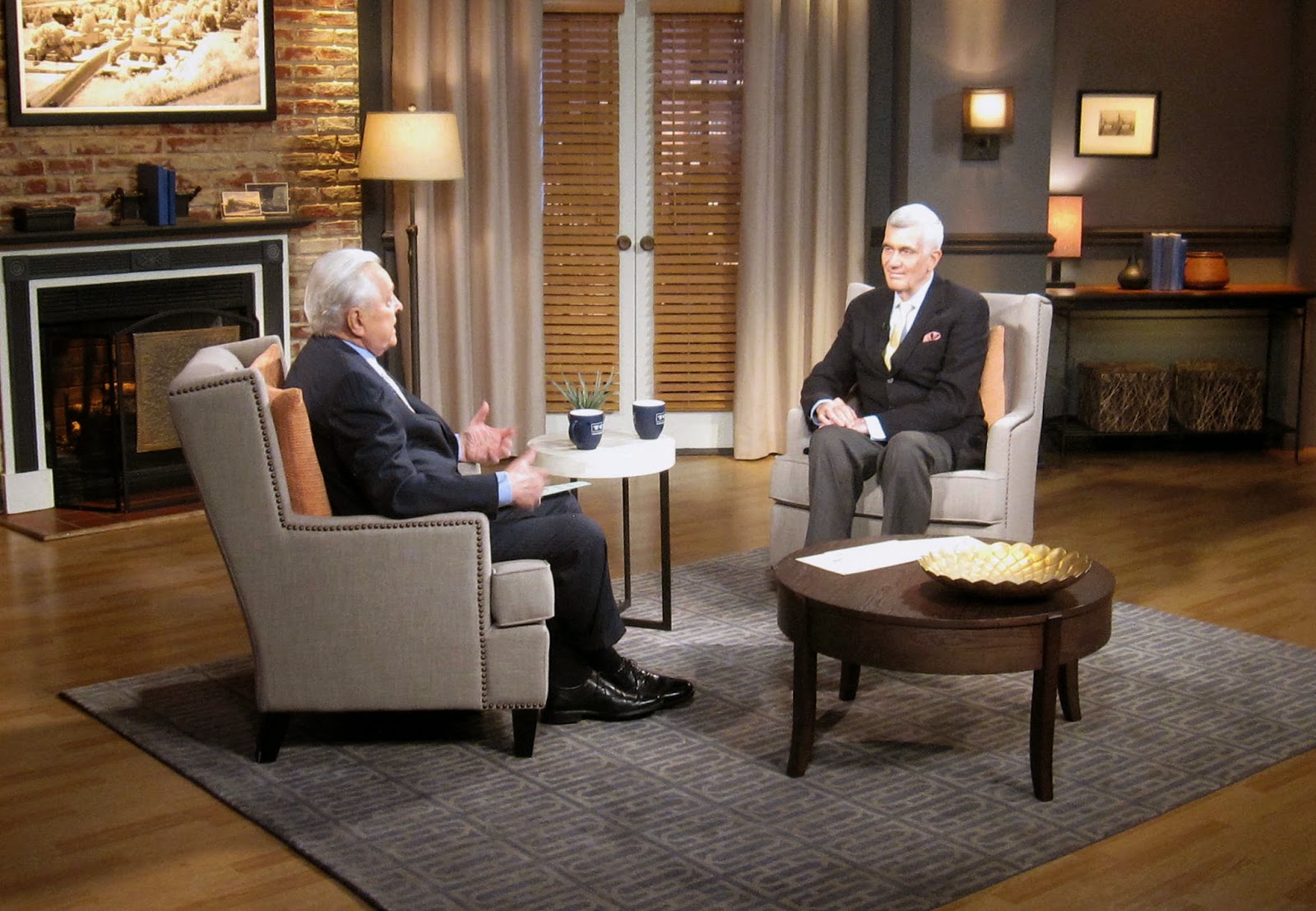
Robert Osborne (left) with John Canemaker

Steve Stanchfield

Tom Stathes
On Monday, October 6, starting at 8 p.m. Eastern time, TCM will be running three specials featuring animation historians John Canemaker, Steve Stanchfield and Tom Stathes.  Canemaker will be talking about Winsor McCay, Stanchfield will be talking about the Van Beuren studio and Stathes will be talking about the Bray studio.  All three programs focus on animation done in New York and contain many examples.

This is the 100th anniversary of McCay's Gertie the Dinosaur as well as the 100th anniversary of the start of the Bray studio.

You can read about the Van Beuren cartoons that will be screened here and read about the Bray cartoons here.

If you have any interest in animation history or just want to see cartoons that you've never seen before, I highly recommend these programs.  Each of these people is an expert in the field.  John Canemaker is an Oscar-winning animator and author of many animation related books.  His most recent are The Lost Notebook: Herman Schultheiss & the Secrets of Walt Disney's Movie Magic and Magic, Color, Flair: The World of Mary Blair.  Steve Stanchfield is the proprietor of Thunderbean Animation, a production company that also produces restored DVDs and Blu-rays of classic animation.  Tom Stathes runs film screenings in the New York area.

Later the same night, TCM will screen Lotte Reineger's The Adventures of Prince Achmed, Max and Dave Fleischer's Gulliver's Travels, Akira Daikubara's Magic Boy, and Chuck Jones' The Phantom Tollbooth.  That's ten solid hours of animation.

Sunday, August 3, 2014

Animation on TCM


Turner Classic Movies will be featuring animation in the immediate and near future.

On Tuesday, Aug 5 at 4:30 a.m Eastern Time, they'll run Gay Purr-ee, a feature made by UPA in 1962, starring the voices of Judy Garland and Robert Goulet.  The songs are by Harold Arlen and Yip Harburg, the team behind the songs in The Wizard of Oz, though these songs are not as memorable.

The crew is a polyglot of Hollywood animation veterans from many studios.  It was directed by Abe Levitow and written by Chuck and Dorothy Jones.  Designers and art directors include Corny Cole, Ernie Nordli and Victor Haboush.  Animators include Ken Harris, Irv Spence, Ben Washam, Ray Patterson, Grant Simmons, Volus Jones, Harvey Toombs, Don Lusk and Hal Ambro.  The studios that those animators worked at include Warner Bros, MGM, Lantz and Disney.

On October 6 (and I'll post a reminder closer to the date), TCM will run 10 hours of continuous animation.  Starting at 8 p.m. Eastern Time, the films of Winsor McCay, with eminent animation historian and McCay biographer John Canemaker as guest.  At 9:45, it's the 100th anniversary of the Bray studio, with guest Tom Stathes, who has emerged as a leading historian of silent animation.  At 11, cartoons from the Van Beuren studio, with guest Steve Stanchfield.

Stanchfield has become one of the premiere home video producers for animation.  While companies like Warner Bros. are retreating from home video formats, Stanchfield is upping the output of his company Thunderbean Animation.  His latest release is Technicolor Dreams and Black and White Nightmares, which includes a color copy of the first three strip Technicolor cartoon, Ted Eshbaugh's The Wizard of Oz.

The balance of TCM's night consists of four animated features.   Lotte Reineger's The Adventures of Prince Achmed is on at 12:15 a.m, Max and Dave Fleischer's Gulliver's Travels is on at 1:30, Toei Animation's Magic Boy is on at 3 and Chuck Jones' The Phantom Tollbooth is on at 4:30.

Tuesday, May 27, 2014

Tissa David and John Canemaker

John Canemaker has generously shared a lengthy video interview with the late Tissa David. It is part autobiography, part nuts and bolts instruction and part philosophy, illustrated by clips of Tissa's work for John and Faith Hubley, Michael Sporn, R.O. Blechman and others.

I knew Tissa when I was beginning my career and it's remarkable how little she changed physically in 30 years.  I also realized when watching this that there are things I'm teaching my students that I learned from Tissa. 

Tissa rarely had the opportunity to work on projects with large budgets.  She was a fantastic draftsman, but she was always conscious of how to get the maximum effect from each drawing.  Her animation was forced to be limited in the sense that she was only allowed a limited number of drawings, but her art and acting were so strong that there was no limit to the expressiveness she could communicate.

It's wonderful to have this video available as a record of her thoughts and work.  Not enough animators write autobiographies, but this lengthy visit with Tissa is the next best thing.

John Canemaker's generosity doesn't stop with this video.  May has been a banner month for John, with the release of an updated version of The Art and Flair of Mary Blair and two new books.  Magic Color Flair: The World of Mary Blair was created to accompany an exhibit of Blair's work at the Disney Family Museum.  The Lost Notebook: Herman Schultheis and the Secrets of Walt Disney's Movie Magic is an annotated version of a manual put together by an early Disney special effects artist.  Cartoon Brew has published samples from the book and Jerry Beck has reviewed it at Cartoon Research.

Sunday, April 22, 2012

The Moon and the Son

I find that many of the most interesting animated films these days are being made in the genre of animated documentaries.  Paul and Sandra Fierlinger, The Rauch Brothers, and Marjane Satrapi ground their films in every day life, rather than fantasy.  This isn't to say that their films don't take advantage of animation's ability to use exaggeration, symbol and metaphor.  It's just that their films illuminate real life instead of providing the audience with an escape from it.

I am late in getting to John Canemaker's The Moon and the Son.  I never saw it in its original release and have only now caught up to it on DVD.  The film won the Academy Award for Best Animated Short in 2005 and it deals with the relationship between John Canemaker and his father.

There's been no shortage of father-son relationship issues in recent animated features.  Finding Nemo, Chicken Little, Ratatouille, and How to Train Your Dragon come to mind.  In each of these films, though, it is the child who is misunderstood and the parent has to come around to understanding and accepting the child.  In The Moon and the Son, both father and son are misunderstood by each other and as the film is Canemaker's attempt to understand the relationship after his father's death, no real resolution is possible.  That's the difference between a film for children and a film for adults.  Canemaker doesn't privilege his own point of view over his father's and paint himself as the victim.  Both he and his father are victims due to circumstances beyond their control.  The question is not who is right and who is wrong.  That's too simplistic.  The question is how do people deal with what life throws at them and how does it affect their relationships with others?  The older I get, the more I think about Jean Renoir's line in his film The Rules of the Game. "The horrible thing about life is that everyone has his reasons."

Canemaker's father had anger issues.  Whether that anger was due to his personality or his circumstances is left to the viewer.  He had a hardscrabble life, typical of working class immigrants and he kept his old world values.  Canemaker was embarrassed by his father's jail time and intimidated by his temper.  While Canemaker escaped the family as an adult, his relationship with his father could be reduced but not resolved.

The history and conflicts in the film are portrayed through animation as well as still photographs, home movies and newspaper clippings.  This allows the film to move freely between emotion and fact and that's what gives the film its power.  This isn't an abstract history but something that had real consequences for the film maker.

The voices in the film are Eli Wallach, portraying Canemaker's father, and John Turturro, portraying Canemaker himself.  Based on the story reel that is an extra on the DVD,  I'm guessing that Wallach and Turturro did not record together.  That's a pity.  Wallach's reading is excellent, though Turturro's is a bit stiff.  I'm sure that if they had the opportunity to work off each other, Turturro's performance would have been fuller.  In many ways, I prefer Canemaker's own reading in the story reel to Turturro's.

The other extras on the DVD are two galleries of artwork and an on-camera interview with John Canemaker and producer Peggy Stern.

There's no shortage of animated films that are trifles, something to amuse or distract and then be quickly forgotten.  The Moon and the Son is not that kind of film.  It's more proof of the emotional richness that animation is capable of when it sticks to the truth.

Friday, October 8, 2010

Irish Animation

John Canemaker's latest article for Print is online, with a survey of the Irish animation scene. It includes embedded versions of two films by Brown Bag, Give Up Yer Aul Sins and Granny O'Grimm's Sleeping Beauty, as well as trailers for two Cartoon Saloon productions, The Secret of Kells and Song of the Sea.

Thursday, August 5, 2010

Various Links

John Canemaker has been contributing articles to Print's online version. His latest is "Chuck Jones at the MacDowell Colony," a speech that Canemaker made as the prelude to Chuck Jones receiving the MacDowell Medal. Jones was only the second filmmaker to receive it (the first was experimental filmmaker Stan Brakhage).

You may have seen video of Pixar's three dimensional zoetrope. If not, you can see it here. Gregory Barsamian is a sculptor who does something similar, creating sequential sculptures that he then films using strobe lights. Unfortunately, his site does not allow embedding or direct links to specific pages, but you can see his work here.

Hogan's Alley is an eclectic magazine about all forms of cartooning. The 17th issue is out and the articles relating to animation include a career-spanning interview with the late Bill Scott conducted by Jim Korkis. Scott was a writer for Warner Bros, UPA and most especially, Jay Ward. There is also an oral history of Spongebob Squarepants. Hogan's Alley has an absolutely horrible web presence, but you can see some web extras for this issue here. You can subscribe here, or look for the issue at better comics shops. If you're going to subscribe, be aware that the magazine appears just annually.

Monday, August 2, 2010

Two Guys Named Joe

John Canemaker has become one of our leading animation historians for several reasons. As an artist and animator himself, he has an advantage over non-artists such as Bob Thomas or Charles Solomon in understanding the process. As someone immersed in animation history, he is familiar with the field in a way that dabblers like Stefan Kanfer or Neal Gabler never can be. As someone who has personal relationships with many of the people he writes about, he has insights that are not available to authors like Donald Crafton, who write about the remote past.

However, all these qualities are trumped by Canemaker's honesty and, perhaps, his courage. Older books on animation tended to be scrubbed clean of studio politics and personal foibles. They were usually content to present chronologies of events and talk of technical and artistic innovations. Canemaker understands that artists are human and so are not wholly admirable and that studios are often battlegrounds where various aesthetics, ambitions, and alliances clash.

When I read Before the Animation Begins, Canemaker's book on the Disney inspirational sketch artists, I was surprised to be reading about recognizable human behavior in a book published by Disney. I'm sure the studio would have been very happy with something along the lines of what Christopher Finch gave them in The Art of Walt Disney, lots of pretty pictures, a cursory history and humorous anecdotes. Instead, Canemaker portrayed the artists sometimes being frustrated, angry and victimized, with many of them happy to leave the studio when a better opportunity came along. I don't know how much Canemaker had to argue for his approach or if the company had matured enough to accept it, but whatever the case, the book raised the standard for animation history.

Canemaker's subsequent books have taken the same approach and Two Guys Named Joe is no exception. It is a dual biography of story artists Joe Ranft and Joe Grant, each of whom was a major influence. Ranft's biggest contribution was at Pixar, though he also worked on films by Henry Selick and Jerry Rees. Joe Grant had two distinct periods at Disney, the early features and the Eisner era.

Ranft had an uncomfortable childhood as he didn't fit in. He was too large, too active and too mean. Spitting at nuns is hardly standard behavior for a future Disney story artist. At some point, though, Ranft decided to remake himself, joining a self-help organization called Lifespring, where he met his wife Su. The marriage proved to be a stabilizing influence on Ranft, who continued his evolution by working with community outreach programs.

Even so, his time at Disney on projects like The Great Mouse Detective and The Rescuers Down Under was not satisfying and he left Disney voluntarily. From there, he worked on The Nightmare Before Christmas, Toy Story, and James and the Giant Peach before moving into Pixar full-time. At Pixar, besides being a primary contributor to the features, his need to help others led him to create story classes where employees had the opportunity to sharpen their skills. Ranft became a resource that many people at Pixar called on.

Joe Grant was not the humanitarian that Joe Ranft was. If anything, Grant was somewhat arrogant, unafraid to alienate people at the studio in order to push his own agenda. The model department, which he headed, was a studio within a studio and Grant protected the artists and the working conditions within it, leading to envy and anger on the part of those on the outside. Even Grant's own collaborators, like Dick Huemer who co-authored Dumbo with him, fell out with Grant and the two never reconciled.

Unlike many Disney artists, Grant had a successful career before joining the studio. Other artists lived in fear of falling out of Walt Disney's favor, but Grant was willing to take chances knowing that he could survive on the outside. He was good at stimulating Walt Disney with various artistic possibilities, but wasn't afraid to disagree with him. That eventually led to Grant leaving the studio in the late '40s and embarking on a career in ceramics and greeting cards.

It was only chance that brought Grant back to Disney. A Disney executive went to interview Jack Kinney about the story process during Walt Disney's lifetime. Kinney was in poor health, so his wife asked Joe Grant to attend as an extra source of information. The Disney exec was so impressed with Grant that he told the studio about him and Tom Schumacher brought Grant in to view work in progress on The Rescuers Down Under. That led to consulting and in 1991 to full time employment. Grant was 83 at the time. Schumacher found Grant, "hard to integrate into the studio process," acknowledging that Grant's personality had not changed over the years.

This book is illustrated with wonderful artwork. Ranft's story sketches are crystal clear, both compositionally and emotionally. There is no visual confusion about what's happening or what a character is thinking or feeling at that moment in time. If Joe Ranft was influenced by Bill Peet, concerned about revealing character through action, Grant seemed influenced by Albert Hurter. Grant's strength, like Hurter's, was the single drawing that suggested character and business possibilities. Don Hahn said, "I don't think he cared about plot all that much."

John Canemaker has contributed yet another essential volume for everyone interested in the animation medium. Both Ranft and Grant are fascinating personalities with strong artistic points of view. Canemaker interviews many other artists about them and the projects they worked on. Two Guys Named Joe is a satisfying read for anyone interested in the creation of Disney and Pixar films.
Friday, July 2, 2010

Toy Story 3: Some thoughts


(There are mild spoilers below.)

Watching Toy Story 3, I think I'm getting a clearer understanding of Andrew Stanton's contribution to Pixar. While most people are comparing the latest Toy Story to the two previous films, it seems to me that the new Toy Story relates most closely to Finding Nemo and Wall-E, two films directed by Stanton. Stanton is listed as one of the writers on the latest Toy Story.

Toy Story 3 resembles Nemo in that it is about moving to a new stage of life, where old relationships cannot stay the same. Marlin has to loosen his grip on Nemo in order for Nemo to grow. Andy has to let go of his childhood in order to become an adult; the toys have to accept that their time with Andy is over. Both films (and many of the Pixar features Stanton has contributed to) deal with separation.

Stanton was adamant about Wall-E not being an ecological fable, yet Toy Story 3 takes the characters to a dump, an endless stretch of society's garbage. It's the kind of place that Wall-E would work. Clearly somebody at Pixar is uncomfortable with the detritus cast off by our consumer society, and based on Wall-E, I'm guessing that it's Stanton. I wonder, too, if it isn't a subversive cry from the heart, disdaining the endless merchandising that Disney grinds out in the wake of Pixar's creations.

At some point, I very much hope that somebody writes a book about the Pixar brain trust similar to John Canemaker's book on the nine old men. While most of the attention has focused on John Lasseter, I suspect that others in the company have had an enormous effect on the shape of the films. Cars, directed by Lasseter without contributions from Stanton or the late Joe Ranft, is the least interesting Pixar feature for me. I think Wall-E is a mess, but at least there are ideas in it; Cars is hollow. I'm looking forward to John Canemaker's book on Joe Grant and Joe Ranft for learning more about Ranft. I wonder if Stanton and Pete Docter will ever come out from behind the Pixar public relations machine to emerge as individuals. We may have to wait until they are retired or dead before people are willing to speak openly.

I found Michael Sporn's comments on the film interesting. I agree with him, but I think what Toy Story 3 is was inevitable. I can't remember if I wrote about this for this blog or for Apatoons, but there is a difference between character and personality. In a single dramatic work, characters change. They start in one emotional place and at the end, the events of the plot cause them to grow into something else. However, as soon as characters are used repeatedly, whether it's for sequels or series, they can no longer change without threatening the aspects that have made them popular with audiences. They are reduced to personalities -- a collection of traits to be trotted out for the audience's satisfaction. Homer Simpson can never really learn anything, or if he learns something it has to be forgotten by the start of the next episode. If he does change, he's no longer Homer Simpson.

The Toy Story characters have become personalities due to their sequels and the forthcoming shorts. As a result, changes have to be superficial, like Spanish Buzz. That's not growth, it's a quirk. The only characters who really change in this film are Andy and Ken. It's a shame that Andy is dropped from the film when he discovers that his toys have been donated. There's no sense that he's upset or conflicted. He doesn't attempt to recover the toys. It's only at the end that we get any insight into his thoughts and while they're poignant, I think the film missed an opportunity by not giving him more screen time, especially since he seems to be written out of the series. That provided a real opportunity to take Andy in new directions without hurting the franchise.

I wonder if Pixar will receive any flak from the gay community over Ken, not due to how he acts but how other characters react to him. The bookworm's reaction to seeing the high heels and the toys' reaction to his handwriting are less than generous. Still, Ken is one of the few characters in this film who grows, coming out of the closet by going into his closet.

Is there anyone making films now, live or animated, who relies as heavily on sentiment as Pixar? I've stopped following Hollywood films for the most part, but I'm guessing the answer is no. Pixar is clearly filling an audience need, one that Hollywood used to dish up regularly. The fact that other studios (like Disney) are not capitalizing on this seems odd to me.

There's no question that Pixar has leveled off, though certainly at a high level. It seems all animated features have also leveled off in that while there are good films and bad, there are no real surprises and no new directions. Nothing stays the same forever and things could possibly get worse, but I do wish that somebody would go deeper into character. There's uncharted territory there for animation; theatre and live action have proven how rich that area is.