Showing posts with label Storyboarding. Show all posts

Wednesday, July 16, 2014

One Day Only - Story Masterclass with Frank Gladstone on 16th August - just £6!


Lupus films are running a one day masterclass with animation industry veteran Frank Gladstone on August 16th in London - for just £6. Anyone who is serious about story telling in animation should attend - I'll most likely be there myself. Frank is a world-class talent whose credits include some of the biggest hits in animation history. Full details below:

What is this class?
Animation guru Frank Gladstone’s masterclass, taught previously at ILM, the Visual Effects Society, Aardman Animations and Cartoon Network, will focus on the deconstruction of feature films, looking at elements such as story structure, use of colour, composition and camera movement, to reveal the fundamental elements of narrative structure and the building blocks of cinematic language.

Gladstone films at www.gladstonefilm.com/

Who is Frank Gladstone?
Frank Gladstone has been working as an animation professional for more than 40 years at major studios including DreamWorks, Warner Brothers and Walt Disney Animation Studios. Independently he consults on animation, film-making skills and story structure at major studios and teaches about animation, film history, production techniques and cinematic fundamentals internationally. His current feature, The Hero Of Color City will be released this October.

Brought to you by Lupus Films
When is it happening?
Cardiff, Saturday 9 August
London, Saturday 16 August 

Where is it happening? 
Precise locations to be confirmed

How can I register?
Sign up at the Official site:
http://www.lupusfilms.com/animation-production/register-your-interest-one-day-masterclass-with-frank-gladstone

---Alex

Sunday, June 15, 2014

Frank Gladstone teaching storyboarding for animation this summer


Lupus animation presents Storyboarding for animation by veteran animator, storyboard artist and producer Frank Gladstone. Frank is a world-class talent and an excellent teacher - last year I attended his storyboard class myself and learned a huge amount. He does lectures and workshops and tells lots and lots of (mostly terrible) jokes. Anyone looking for a crash course in Hollywood storyboarding would be well advised to sign up. The course runs from 28 July to 22 August. Full details below.


Lupus Films are the folks who brought you The Snowman and the Snowdog, and they are one of the UK's leading producers of TV animation. Nestled in between a dry cleaner and a curry house in Islington, you wouldn't notice them if you didn't know where to look. But they are a nice bunch of folks and their classes are excellent.

Highly recommended.

----Alex


Thursday, August 15, 2013

What is Previz and why should we teach it?

What is Previz? Wikipedia defines it thus:

"Previsualization (also known as pre-rendering, preview or wireframe windows) is a function to visualise complex scenes in a movie before filming. It is also a concept in still photography. Previsualization is applied to techniques such as storyboarding, either in the form of charcoal drawn sketches or in digital technology in the planning and conceptualization of movie scenery make up."

Hmmm....OK, that sounds fine, but a bit dry. I think my definition would be this: "Previz is a film-making technique whereby very rough digital sets and models are created which are then assembled into a sequence, before the actual movie gets made, in order to plan effectively and save time and money".

In other words, it's a way of testing everything out cheaply and quickly using digital media before going to all the expense and bother of actually filming it. The important thing from our perspective is that it is cheap, highly effective, and a big growth area in film-making. It's also huge fun, and there are jobs out there for those who know how to do it.

But wait, I hear you say - isn't this what storyboards are for? To plan out shots in advance? The answer, of course, is yes. Previz is really just digital storyboarding. The whole point of it is to plan out a sequence in advance to save time and money and to make things work better. Previz is really just a form of digital storyboarding. Just like storyboards, none of the assets used in previz will end up on screen. But the ideas that went into them will.

Almost all directors pre-viz their work now, especially fast action action sequences which need careful planning to make them work seamlessly, to make sure all the cuts work and the sequence has a rhythm and builds to a satisfying climax. But that is part of the fun of it; working with the director, helping to craft a film at the start of the production - the creative, interesting part.

The skills you need to be a good previz artist inlude:
  • modeling 
  • texturing
  • lighting
  • animation
  • editing
  • storytelling 
  • problem-solving
So, in short, you need a broad variety of skills, general digital skills in fact. Good previz artists are all-rounders, capable of turning their hand to pretty much any part of the pipeline.

But don't take it from me, watch this video in which Fast and Furious director Justin Lin explains everything...

You can also read the Wikipedia page on Previz here:

---Alex

Tuesday, July 2, 2013

Storyboarding in Toonboom, or: What Do Academics Do All Summer?


The Academic Life?
How do academics spend their summers? Lounging by the pool in Tuscany drinking chianti? Well, maybe some do. Sadly, not in my case. For the month of July, I am polishing my storyboarding skills courtesy of Creative Skillset, who have generously paid for fifteen aspiring board artists to learn Toon Boom Storyboard Pro, mentored as it turns out by my old friend and kumrad Frank Gladstone who has flown all the way from Los Angeles to get us Brits on track.


Storyboarding is something that almost every animation artist claims to do. Story boards? Sure, I do that, we all say confidently. Yet, as every director knows, not all board artists are created equal. It’s a complex craft and learning it takes time. Maybe the difficulty with getting it right is the sheer number of different skills you need to master in order to become useful. In fact, while we’re on the subject, let’s make a list of what a good board artist should be:

1. Story-teller. Duh, the obvious one. Good storyboard artists are writers. They know how to tell a story, how to make it exciting, interesting, and make the reader (or the viewer) want to know what's going to happen next.

2. Draughtsman. This is a tough one to avoid. If your drawings don’t look like the character, you will struggle to do decent boards.

3. Cinematographer. Good board artists understand camera, know where to put it, and what to do with it. In film-making, the camera is as much a story teller as is the writer.

4. Editor. Knowing how to cut is vital. Shots don't stand alone, they must be sequential, and the sequence must have a rhythm to it. Every sequence is a mini-movie that has to flow seamlessly from one end to another.

5. Entertainer. Like animators, good board artists need to be entertaining. By which I mean – funny. Most animation boards are comedies. Not all the time, but most of the time. And a good story board artist makes it feel fun.
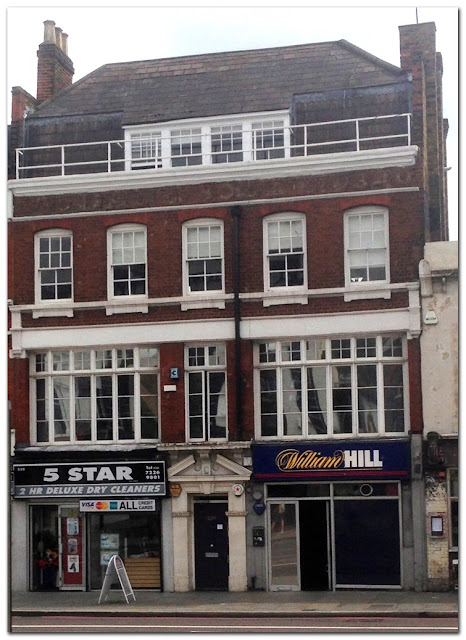
 
The glamour of Islington
Hosting our little story board master class is Lupus Films, the talented folks who brought you The Snowman and the Snow Dog last Christmas. Their offices are in fashionable Islington, land of hipsters and Guardianistas. The building is right on the high street, their front door sandwiched neatly between the bookie and the dry cleaners.
And what of my fellow students? They come from all over the UK. Some are from Wales, recently laid off by the once-might Dynamo, kings of Rasta Mouse, who have recently gone bust. What a shame, I thought, but then, that’s so often the case in the animation business. Studios find a hit, get lots of work in, expand, get some nice premises, then suddenly the work dries up and….they go bust. It’s always been the way. The shinier the building, the bigger the overhead....you know how the story ends.

When I learned to do boards, it was all done by hand, just like the animation, then filmed under a rostrum camera. Then came scanners, and digital editing, and now....it's all digital from the beginning. Why go to the trouble of scanning, cropping and editing the boards when you can draw the whole thing in a Cintique, or on a Wacom tablet? Even dinosaurs like me have to concede that the speed and efficiency of a digital workflow is its own reward.

Teaching storyboards at Bucks is a challenge because many of our students have little or no formal art instruction. Classical drawing skills are nowadays taught less and less in school, sacrificed in favour of softer skills like research. And research is no doubt useful, but it won't help you draw the boards.

But it's still possible. You can do a lot with stick figures and mr men. The key skills for undergraduates to learn are about basic film-making. Where does the camera go? What does the start of a shot look like? It's not really a drawing exercise - it's all about thinking, planning and organisation.

So we'll be building storyboards into the course, making sure our students know the basics of film-making, and know how to plan and build a short film project. After all, the animation only begins when the storyboards are done, and it doesn't pay to do the process backwards.

----Alex