Tuesday, September 20, 2011

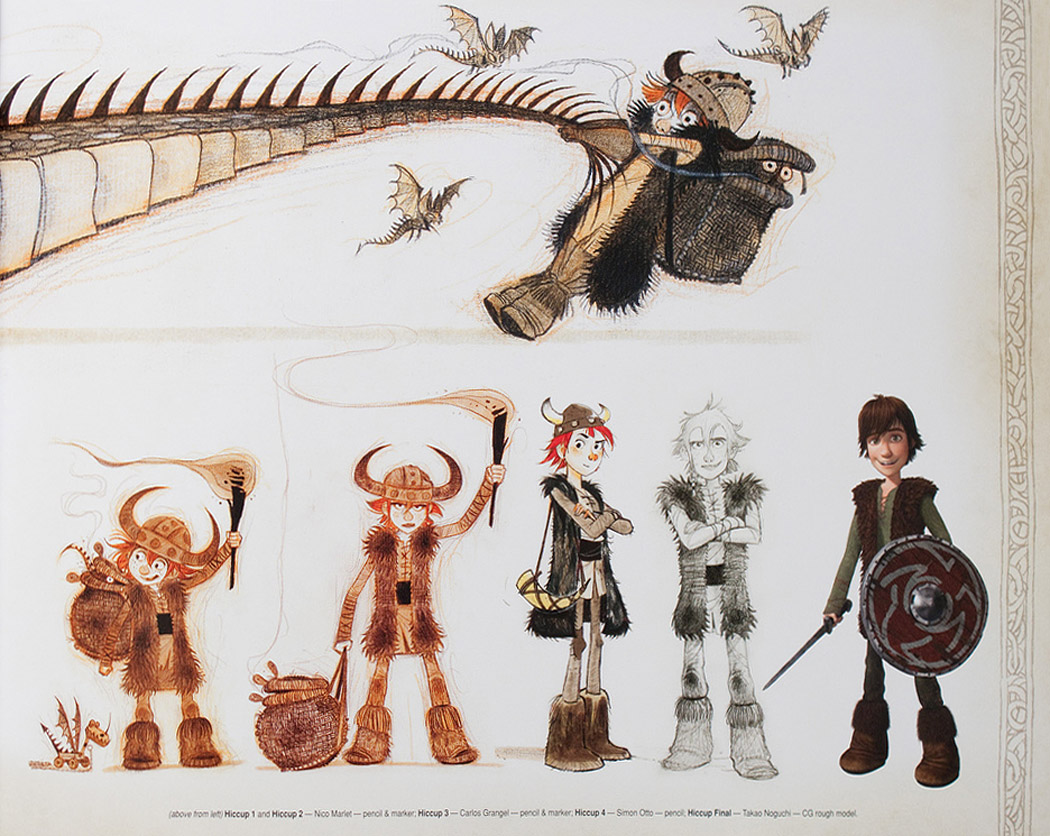
How To Train Your Dragon (2010) - Character Design

© DreamWorks Animation SKG, Inc. © Paramount Pictures Corporation

Early Hiccupp drawing
by Shane Prigmore
by Nicolas Marlet

by Nico Marlet
by Nico Marletby Nico Marlet
by Nico Marlet
by Nico Marlet
by Nico Marlet, Carlos Grangel & Simon Otto
by Nico Marlet
by Simon Otto
by Justin Hunt


by Simon Otto


by Nico Marlet
by Nico Marlet
by Nico Marlet

by Nico Marlet
by Nico Marlet
by Nico Marlet
by Nico Marlet
by Carlos Grangel

by Nico Marlet
by Nico Marlet
by Nico Marlet
by Nico Marlet

by Nico Marlet


by Nico Marlet
by Nico Marlet


by Nico Marlet

by Morgan Kelly & Nico Marlet


by Nico Marlet
by Nico Marlet
by Nico Marletby Nico Marlet


by Nico Marlet


OTHER EARLY CONCEPTS


by Toby Shelton
by Toby Shelton
by Toby Shelton
by Toby Shelton

Early Fishlegs concept
by Nico Marlet
At one point in character development, there was a consideration of making Snotlout a female, and a tough one at that. But it's probably not wise to mock this kid for wearing a dress now.
by Nico Marlet
by Nico Marlet
More early Snotlout sketches
by Toby Shelton
by Toby Shelton
by Toby Shelton

Early drawings of Astrid
by Nico Marlet
by Nico Marlet
by Nico Marlet
by Nico Marlet
by Nico Marlet

Early Stoick the Vast concept
by Nico Marlet
Early drawing of Hiccup's Mom
by Nico Marlet
Early dragon concepts
by Toby Shelton


by Jean-Francois Rey, Shane Prigmore & Nico Marlet
by Shane Prigmore

by Shannon Tindle
by Shannon Tindle
by Shannon Tindle


by Dan Krall


Monday, September 19, 2011

At the Ottawa Festival

I will be at the Ottawa Animation Festival from sometime Friday afternoon until Sunday afternoon. On Saturday at 1:00, I'll be on a panel called Web Portfolios with Richard O'Connor of Ace and Son Moving Picture Company and Brooke Keesling of The Cartoon Network.

Stop by and say hello if you're there.

Sunday, September 18, 2011

Invitation to the Dance


Most animation fans are familiar with the sequence in Anchors Aweigh where Gene Kelly dances with Jerry, the mouse from Tom and Jerry cartoons. Fewer fans have seen Invitation to the Dance, a feature spearheaded by star Gene Kelly which consists entirely of three dance sequences. The last sequence is "Sinbad the Sailor" and features Kelly dancing with animated characters produced by Hanna Barbera while they were still at MGM.

The film will be showing on Turner Classic Movies early in the morning of Tuesday Sept. 20 at 12:15 a.m. Eastern Time. Or if you prefer, late Monday night. In any case, TCM only runs the film every few years, so you might want to catch it if you're interested.

Below is an excerpt from the animated sequence.

Wednesday, September 14, 2011

Jeff Gabor Animation Workflow Webinar

I would highly recommend if you haven't seen or signed up for the Jeff Gabor workflow webinar that AnimSchool just released head on over to the site and register. They will send you a link and I don't have to tell you but Jeff is great! He breaks his process down and there are plenty of good nuggets to get from this webinar.


Enjoy!
JP

Tuesday, September 13, 2011

Acting Reference Sites

Hey Everybody

There are a couple of great sites I've been meaning to post about that have some great Acting Reference for those of us that can't get enough. One by Kyle Kenworthy and the other is created by Andrew Root. They are both on Vimeo and Andrews is a group where I believe you can upload your own acting ref that you may have stored.


                               Acting Reference Videos on Vimeo

Have a look around and enjoy!
JP

Monday, September 12, 2011

I Have An Idea for an Animated Film. Can You Make It For Me?

Steve Bissette, a comics artist who also writes and publishes, has posted a great piece on issues surrounding collaborating on a graphic novel.

The piece is relevant because the requests that Bissette is addressing are similar to those that I regularly address as the coordinator of Sheridan College's animation program. I am constantly fielding phone calls and emails requesting that students create films for individuals and organizations. As Bissette points out, like it or not, drawing takes longer than writing. And animating most certainly takes longer than writing.

My first question when I get these requests is to ask if this is a paying project. Most times it isn't. In that case, my response is that we have a highly structured curriculum and we're not able to accommodate the request. If the job is paying, I try to connect a recent graduate with the project.

I don't doubt that many animation artists get requests like this. I remember somebody who wanted an animation done for her daughter's birthday party with a caricature of the mother as the main character. I think the fee on that was as high as $100, but when I quoted industry rates, that ended the discussion quickly.

People generally don't understand how labour intensive drawing and animating are. They also assume, as Bissette points out, that artists are devoid of ideas, just sitting around waiting for somebody to give them one. The problem is never finding an idea, it's finding the time and money to work on an idea.

Bissette raises a lot of issues concerning ownership, royalties, etc. which are food for thought for anybody who is hired to collaborate, as opposed to simply being hired to execute. While the issues surrounding graphic novels and animation don't match exactly, there are enough in common to make the piece worth reading.